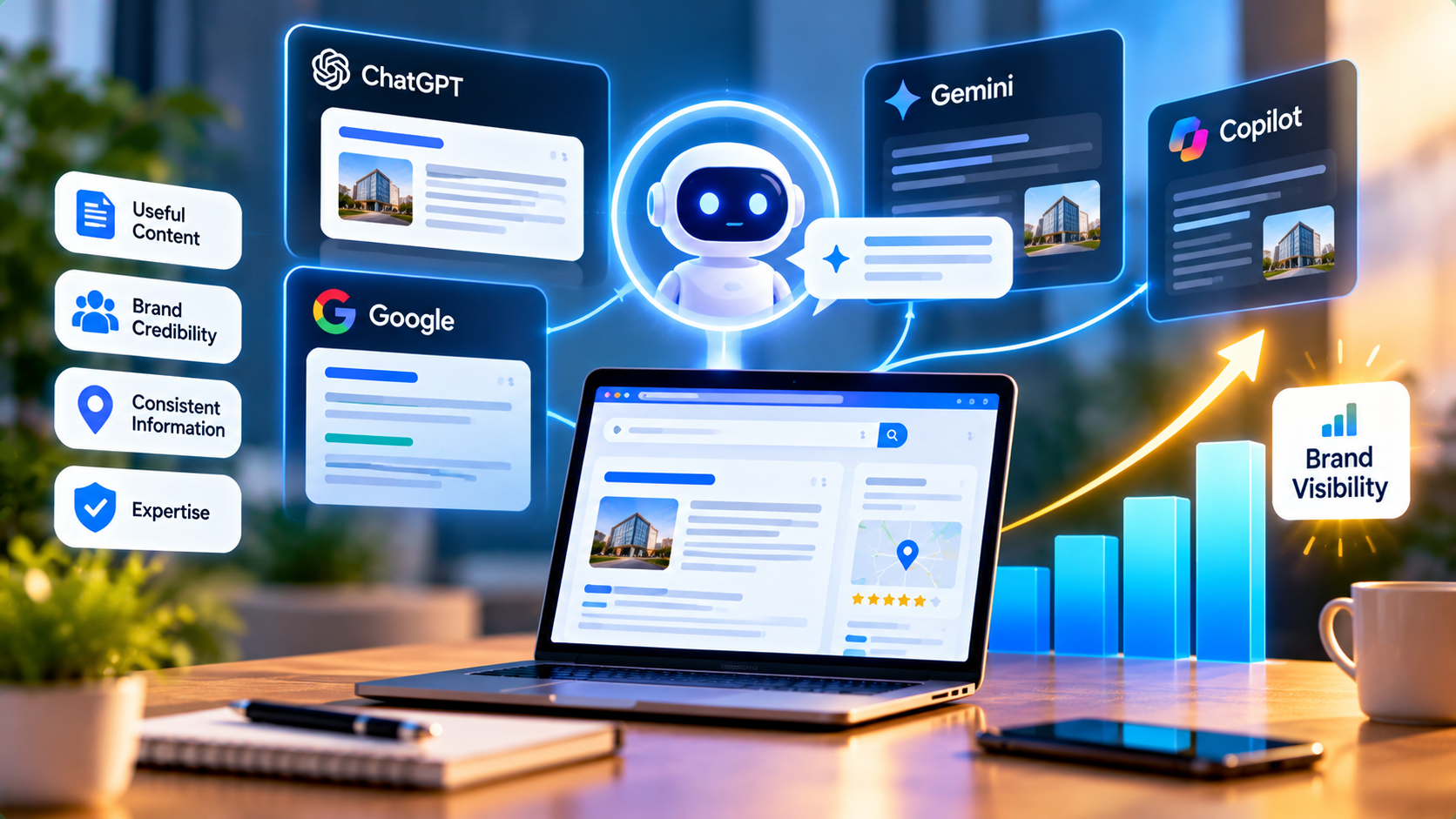
How Can Businesses Use GEO to Increase Brand Visibility in AI-Powered Search?
Introduction: Why Is AI-Powered Search Important for Digital Marketing?
The way people discover businesses online is changing. In addition to traditional search engine results, users increasingly explore AI-powered search experiences to research products, compare services, ask questions, and find recommendations.
For businesses, this creates a new consideration in digital marketing: how can their brand information and website content remain useful and discoverable as search experiences evolve?
Traditional Search Engine Optimization (SEO) remains important for improving organic search visibility. However, businesses can also focus on creating content that clearly communicates their expertise, services, and business identity to generative AI systems.
This is where Generative Engine Optimization (GEO) becomes relevant. GEO focuses on improving how content can be understood and potentially referenced by AI-powered search experiences.
At OBSquare, GEO can be considered part of a broader digital marketing strategy that combines useful content, brand credibility, SEO, and consistent online communication to support business visibility across changing digital channels.
What Is Generative Engine Optimization (GEO)?
Generative Engine Optimization is a digital marketing approach that focuses on making website content and brand information more understandable and potentially useful to generative AI-powered search systems.
These systems may summarize information from multiple sources to answer questions, explain concepts, or help users compare available options. Depending on the platform, they may also identify and cite sources or mention relevant businesses.
GEO encourages businesses to publish clear, informative, credible content that accurately explains what they offer and why it matters to their target audience.
For example, a digital marketing agency may publish practical guides about SEO, paid advertising, content marketing, and lead generation. Each guide can explain the topic thoroughly, use relevant examples, and connect naturally to the agency's services.
GEO does not guarantee that a brand will appear in an AI-generated answer. Instead, it helps businesses focus on the quality, clarity, and credibility of their online information.
How Does GEO Differ From Traditional SEO?
SEO and GEO have related objectives, but they emphasize different aspects of online discovery.
SEO focuses on helping search engines discover, crawl, index, and rank relevant webpages. It includes keyword research, on-page optimization, technical SEO, internal linking, content quality, and other factors.
GEO focuses on how content communicates information that generative AI search experiences may interpret, summarize, or reference.
SEO: Improve Organic Search Visibility
Businesses use SEO to improve their opportunities to appear in relevant organic search results. This includes creating useful landing pages, optimizing website content, improving technical performance, and earning relevant references from other websites.
GEO: Strengthen Content Clarity and Context
GEO encourages businesses to explain topics clearly, provide meaningful context, demonstrate expertise, and maintain accurate brand information.
Why Businesses Should Consider Both
SEO and GEO should not be treated as competing strategies. A technically sound website with useful, well-organized content can support traditional search visibility while also providing clearer information for systems that interpret online content.
Businesses should continue investing in proven SEO practices while evaluating how their content performs across newer AI-powered search experiences.
Why Does Brand Visibility Matter in AI-Powered Search?
Brand visibility is not limited to appearing at the top of a traditional search results page. Customers may discover a business through articles, online reviews, business listings, social media, recommendations, and AI-generated responses.
When users research a product or service, they often want to understand which businesses are relevant, what those businesses offer, and whether they can be trusted.
A clear and consistent online presence helps communicate this information.
Build Recognition Around Your Services
Businesses should explain their services in specific, understandable terms. A company that provides SEO, social media marketing, Google Ads management, and content creation should have relevant content that explains each service and its benefits.
This helps prospective customers understand the business without having to infer its offerings from vague promotional statements.
Establish Consistent Business Information
A business should maintain accurate information about its name, services, contact details, location, and website across relevant platforms.
Inconsistent or outdated information can confuse potential customers and make the business's online presence less reliable.
Develop a Recognizable Brand Identity
Consistent messaging, authentic examples of work, clear service descriptions, and useful educational content can reinforce what a business is known for.
GEO should support this broader brand-building effort rather than be treated as a shortcut to AI recommendations.
How Can Businesses Create GEO-Friendly Content?
Content quality is central to a strong GEO-oriented strategy. Businesses should create resources that help their audience understand a topic, solve a problem, or make a more informed decision.
1. Publish Useful, In-Depth Content
Businesses should create articles that address real customer needs rather than publishing large volumes of generic material.
For example, a business offering digital marketing services could publish a guide explaining how small businesses can improve their online visibility. The guide could discuss SEO, content marketing, social media promotion, and paid advertising, including the situations in which each approach may be appropriate.
Practical explanations provide more value than repetitive promotional language.
2. Answer Specific Customer Questions
Potential customers often ask questions before choosing a service provider. These questions can become useful blog topics, service-page sections, and educational resources.
For example:
- How can a small business improve its online visibility?
- How can digital marketing generate qualified enquiries?
- What is the difference between SEO and GEO?
- How can businesses measure the performance of digital marketing campaigns?
Content that addresses these questions clearly can help readers understand their options and evaluate possible solutions.
3. Include Examples and Supporting Evidence
Businesses can strengthen content by including genuine project examples, original observations, reliable references, and verifiable data where available.
If a company publishes a case study, it should explain the work performed and the results achieved without exaggerating outcomes or making unsupported claims.
Credible evidence can help readers evaluate the information and understand the business's experience.
4. Keep Content Accurate and Updated
Outdated information can reduce the usefulness of a webpage. Businesses should review important articles, service descriptions, prices, and company information periodically.
When guidance or services change, the content should be updated to reflect the current situation.
The aim is to maintain a dependable information source for customers and other systems that may interpret the website.
How Can SEO Support GEO?
SEO provides an important foundation for a business's broader online visibility strategy.
Before content can be useful in a search experience, the website needs to be accessible and its important pages should be discoverable. Technical problems, confusing navigation, broken links, and incorrect indexing settings can interfere with these goals.
Optimize Pages for Relevant Search Intent
Businesses should identify the queries their potential customers use and create content that matches the underlying need.
A person searching for a definition may need an educational article, while someone searching for a particular service may need a detailed service page.
Matching content to search intent helps ensure that each page serves a clear purpose.
Improve Website Structure and Navigation
Descriptive URLs, logical headings, useful internal links, and accessible navigation help people find information more easily.
Businesses should connect related articles and service pages where the links provide additional value to the reader.
Maintain Technical SEO Essentials
Important pages should be accessible to relevant crawlers, return the correct status codes, use appropriate canonical URLs, and provide useful metadata.
An XML sitemap can help communicate which URLs a site considers important, while robots.txt should be configured carefully to avoid unintentionally blocking essential resources.
These practices support website quality and search accessibility, although they do not guarantee AI citations or recommendations.
How Can Businesses Strengthen Online Credibility for GEO?
Credibility is an important consideration when users evaluate businesses and the information published about them.
A GEO-oriented digital marketing strategy should focus on communicating genuine expertise and maintaining a trustworthy online presence.
Demonstrate Real Expertise
Businesses should explain how their services work, what customers can expect, and which factors influence outcomes.
For example, a digital marketing agency can explain how keyword research informs content planning or how campaign reporting helps identify opportunities for improvement.
Clear explanations help potential customers evaluate the business's knowledge without relying on unsupported claims.
Encourage Genuine Customer Reviews
Customer reviews can help prospective buyers understand other people's experiences with a business.
Companies should encourage honest feedback through appropriate channels, respond professionally to reviews, and address customer concerns where possible.
Reviews should never be fabricated or manipulated to create a misleading impression of reputation.
Publish Authentic Case Studies
Case studies can demonstrate how a business approaches a problem, implements a solution, and evaluates results.
When using performance figures, businesses should provide appropriate context and ensure that the results are accurate and supportable.
Maintain Consistent Brand Details
The business name, website, services, and contact information should be consistent across relevant profiles and publications.
Accurate organization information makes it easier for customers to identify the business and understand its offerings.
These practices strengthen general brand credibility. They do not guarantee that an AI platform will select the business as a source.
How Can Local Businesses Use GEO to Improve Brand Discovery?
Local businesses can apply GEO alongside local SEO and other digital marketing activities to make their services easier for potential customers to understand.
For example, a business serving customers in Pondicherry can explain its service areas, maintain accurate business details, and publish useful content addressing local customer needs.
Maintain an Accurate Google Business Profile
Businesses should keep their business category, contact details, operating hours, website, and service information accurate.
They should also respond to customer reviews professionally and keep the profile updated when business information changes.
Create Useful Local Content
Local content should explain the services offered and the needs of customers in the areas served.
Instead of creating many nearly identical location pages, businesses should prioritize pages that provide meaningful information specific to the location or audience.
Build Local Credibility
Relevant partnerships, genuine customer experiences, useful local resources, and consistent business information can support a stronger local presence.
These activities can help people understand the business and may support broader discoverability. However, local AI visibility is not guaranteed by any single optimization tactic.
How Can Content Marketing and GEO Work Together?
Content marketing gives businesses a practical way to develop and distribute information that explains their expertise, answers customer questions, and supports brand awareness.
When combined with GEO, content marketing should emphasize clear explanations, credible information, and useful connections between related topics.
Create Content Around Core Services
Businesses should identify their main services and develop a content plan around customer needs associated with each service.
A digital marketing agency, for example, could publish separate resources about SEO, social media marketing, Google Ads, content marketing, and lead generation.
Each article should provide distinct value rather than repeating the same information with a different title.
Connect Related Articles
Internal links can guide readers from introductory content to detailed guides and relevant service pages.
For example, an article about local online visibility could link to a local SEO service page, while a broader digital marketing guide could link to relevant articles about paid advertising and content creation.
These connections help readers explore related information and understand the services available.
Distribute Content Across Relevant Channels
Businesses can adapt blog content into social media posts, short videos, newsletters, and other formats.
The information should remain accurate and consistent while being tailored to the platform and audience.
A coordinated approach can increase opportunities for people to discover the brand through multiple channels.
How Can Businesses Measure GEO Performance?
Measuring GEO can be more difficult than tracking conventional website traffic because not every AI-generated answer, brand mention, or citation is visible to the business.
A practical measurement strategy should combine available AI-related indicators with established digital marketing metrics.
Monitor Referral Traffic
Website analytics may identify visits arriving from certain AI-powered platforms. Businesses can review this traffic to understand whether those platforms contribute measurable website visits.
However, referral data may not capture every interaction or correctly identify every source.
Review Brand Mentions Where Possible
Businesses can periodically review relevant AI-powered search experiences using representative customer questions to understand how their brand is described.
These observations are snapshots rather than complete measurements. Responses can vary depending on the platform, query, location, personalization, and time.
Track Organic Search Performance
Google Search Console can help businesses monitor impressions, clicks, queries, and landing-page performance in traditional search.
These metrics remain useful even when the business is also evaluating GEO.
Measure Qualified Leads and Conversions
Enquiries, calls, purchases, consultation requests, and qualified leads provide a clearer connection between marketing activity and business objectives.
Businesses should evaluate these outcomes alongside traffic and visibility metrics rather than assuming that more mentions automatically produce more customers.
Common GEO Mistakes Businesses Should Avoid
Businesses can waste time and resources if they approach GEO as a collection of shortcuts rather than a content and brand strategy.
Expecting guaranteed AI citations: No GEO method guarantees that an AI-powered platform will mention or recommend a business.
Publishing generic content at scale: Repetitive articles without meaningful information can weaken the overall quality of a website.
Ignoring SEO fundamentals: GEO should complement technical SEO, useful content, and accessible website design.
Using inaccurate business information: Inconsistent details can confuse customers and undermine trust.
Creating artificial reviews or mentions: Fabricated credibility signals can mislead customers and damage a brand's reputation.
Focusing only on AI platforms: Customers continue to discover businesses through traditional search, referrals, social media, advertising, and other channels.
Measuring visibility without business outcomes: Brand mentions and website visits should be evaluated alongside qualified enquiries, conversions, and other meaningful results.
A sustainable approach prioritizes useful information, accurate business details, genuine expertise, and consistent measurement.
How Can OBSquare Help Businesses With GEO and Digital Marketing?
OBSquare supports businesses with digital marketing services that can help strengthen their online presence and communicate their value to potential customers.
Depending on business needs, an integrated strategy may include SEO, blog writing, content marketing, Google Business Profile management, social media marketing, Google Ads, Meta Ads, video content, and website development.
For GEO-oriented digital marketing, businesses can focus on developing useful content, maintaining consistent brand information, improving website organization, and publishing credible information about their services.
These activities can work alongside established SEO practices and broader brand-building efforts.
OBSquare can help businesses plan content around their audiences, align marketing activities with business goals, and review performance using relevant indicators. The specific strategy should depend on the business's industry, target market, competition, budget, and objectives.
Conclusion: Build a Stronger Brand Presence for AI-Powered Search
AI-powered search is creating new ways for customers to explore information and evaluate businesses. Generative Engine Optimization gives businesses a framework for thinking about how clearly their content communicates their expertise, services, and brand identity.
By combining useful content, SEO fundamentals, accurate business information, genuine credibility, and consistent performance measurement, businesses can build a stronger foundation for online discovery.
GEO should not replace SEO, content marketing, or other established digital marketing activities. Instead, it can complement them as businesses adapt to changing search experiences.
For businesses looking to improve their online presence, OBSquare can help develop a coordinated digital marketing strategy that supports brand awareness, customer trust, and meaningful enquiries across relevant channels.