How Influencer Marketing Helps Brands Reach New Audiences
In today’s digital environment, customers are constantly exposed to advertisements, promotional messages, and branded content. Because of this, businesses are looking for more authentic ways to connect with potential customers.
Influencer marketing has become an effective way for brands to introduce their products and services to new audiences through creators who already have established communities and relationships with their followers.
Instead of communicating directly through traditional advertisements, businesses can collaborate with relevant influencers who can introduce the brand in a more natural and engaging way.
When planned properly, influencer marketing can help businesses increase brand awareness, reach new audiences, build credibility, and support customer acquisition.
What Is Influencer Marketing?
Influencer marketing is a digital marketing strategy where a business collaborates with an individual who has an established audience on platforms such as Instagram, YouTube, Facebook, or other social networks.
The influencer creates content featuring the brand, product, or service and shares it with their audience.
Influencer collaborations can include:
- Product reviews
- Sponsored posts
- Instagram Reels
- YouTube videos
- Product demonstrations
- Unboxing videos
- Brand mentions
- Event coverage
- Giveaways
- Lifestyle content
The right collaboration depends on the brand's goals and target audience.
Why Influencer Marketing Is Important
Customers often trust recommendations from people they follow online.
An influencer who consistently creates useful or entertaining content may have built a strong relationship with their audience.
When that creator recommends or demonstrates a product, the recommendation can feel more personal than a traditional advertisement.
Influencer marketing can help businesses:
- Reach new audiences
- Increase brand awareness
- Build credibility
- Generate engagement
- Promote products
- Introduce new services
- Create social proof
- Drive website traffic
- Generate potential leads
How Influencer Marketing Helps Reach New Audiences
One of the biggest advantages of influencer marketing is access to an existing audience.
A business may have a limited number of followers on its own social media channels. Working with the right influencer can introduce the brand to thousands of relevant people who may not have discovered it otherwise.
For example, a local fashion business could collaborate with a fashion creator whose followers are interested in clothing and lifestyle products.
This makes the campaign more targeted than simply promoting the product to a general audience.
Choosing the Right Influencer
The number of followers should not be the only factor businesses consider.
An influencer with a smaller but highly relevant audience may sometimes be more useful than an influencer with a very large but unrelated audience.
Businesses should consider:
Audience Relevance
Does the influencer's audience match your target customers?
Engagement
Do followers actively like, comment, share, and interact with the creator's content?
Content Quality
Does the creator produce professional and engaging content?
Brand Compatibility
Does the influencer's personality and content style match your brand?
Audience Location
For local businesses, it can be particularly useful to work with creators who have a strong audience in the target city or region.
Different Types of Influencers
Influencers can be categorized based on their audience size and niche.
Nano Influencers
Nano influencers generally have smaller audiences but may have strong relationships with their followers.
They can be useful for highly targeted and local campaigns.
Micro Influencers
Micro influencers have larger niche communities and often focus on specific interests such as fashion, food, technology, fitness, travel, or business.
Macro Influencers
Macro influencers have significantly larger audiences and can provide broad exposure.
They may be useful for large awareness campaigns.
Niche Influencers
Some creators focus heavily on a particular subject.
For example:
- Food creators
- Travel creators
- Technology creators
- Beauty creators
- Fitness creators
- Business creators
- Fashion creators
Niche influencers can help brands reach audiences that are already interested in a specific category.
Influencer Marketing for Local Businesses
Influencer marketing can be particularly useful for businesses targeting a specific city.
Local creators can introduce businesses to audiences who live in the same area.
For example, a Pondicherry-based business could collaborate with local lifestyle, food, travel, fashion, or business creators to reach people interested in local products and services.
Local influencer campaigns can be used to promote:
- Restaurants
- Cafes
- Retail stores
- Events
- Fashion brands
- Salons
- Hotels
- Local services
- New product launches
Product Promotion Through Influencers
Influencers can demonstrate products in real-world situations.
Instead of simply showing a product photograph, a creator can demonstrate how the product works or explain why they find it useful.
This can make the product easier for potential customers to understand.
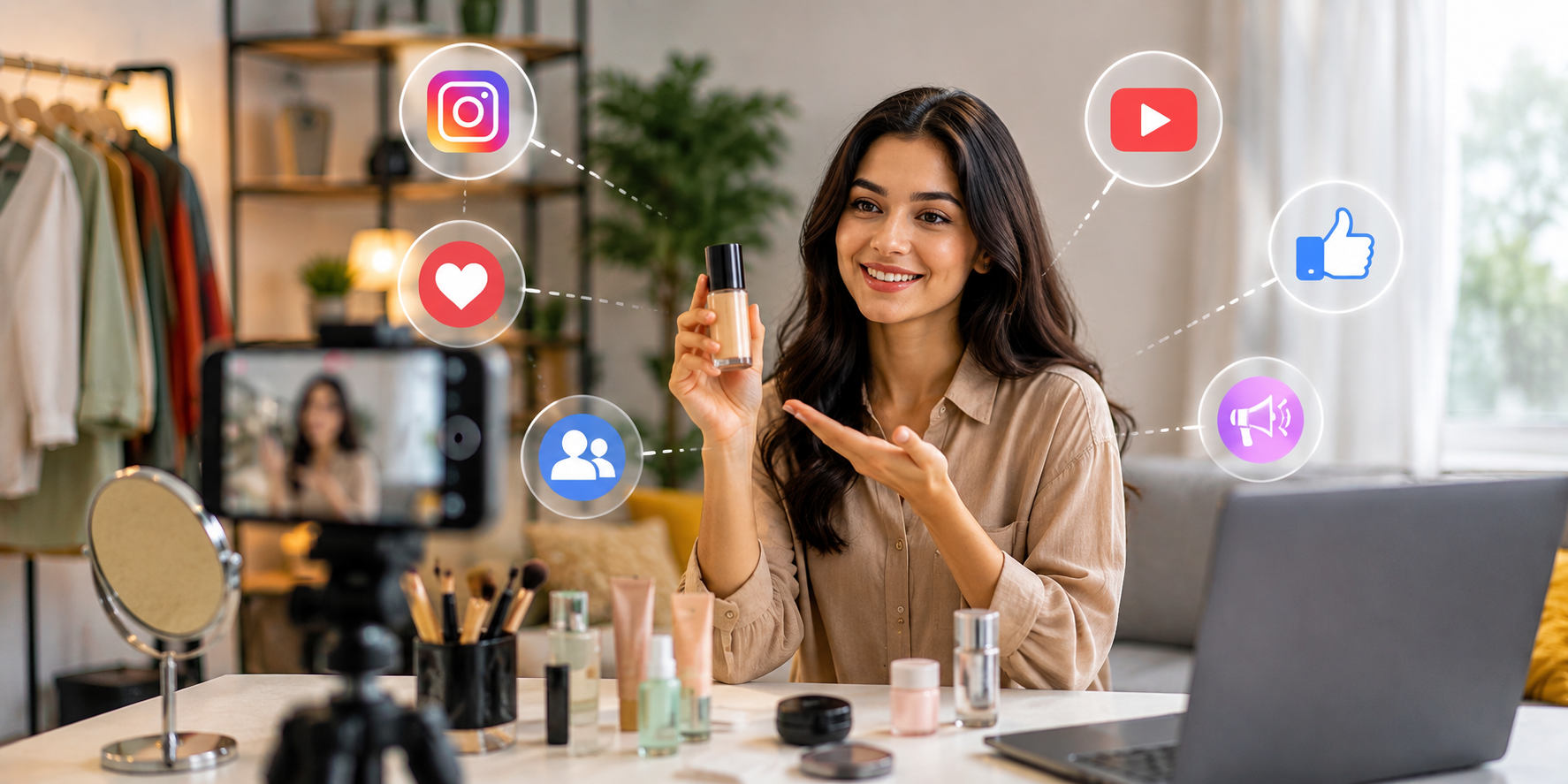
For example, a beauty creator can demonstrate a cosmetic product, while a technology creator can showcase the features of a new device.
Influencer Marketing and Brand Awareness
Influencer campaigns can help introduce a brand to people who have never encountered it before.
Repeated exposure can increase familiarity with the brand.
A successful awareness campaign can help customers remember:
- Brand name
- Product
- Visual identity
- Unique selling points
- Brand personality
This can contribute to stronger recognition over time.
Influencer Content Can Be Repurposed
One advantage of influencer marketing is that the content created during a collaboration can sometimes provide additional marketing opportunities, depending on the agreed usage rights.
For example, a business may be able to use approved influencer content for:
- Social media posts
- Website content
- Promotional campaigns
- Advertising
- Product pages
- Marketing presentations
Businesses should always clearly agree on content usage rights before using influencer-created material in other campaigns.
Influencer Marketing and Social Media
Influencer marketing works particularly well when combined with a broader social media strategy.
For example, a business can:
- Collaborate with an influencer.
- Publish the influencer's content.
- Share the campaign through its own social channels.
- Encourage customers to engage with the content.
- Use relevant campaign content in other marketing activities.
This creates multiple opportunities to reach the audience.
Influencer Marketing for Product Launches
Influencers can help generate interest before and during a product launch.
A campaign could include:
Before Launch:
Teaser content and product previews.
Launch:
Product demonstration or announcement.
After Launch:
Reviews, experiences, and customer-focused content.
This can create anticipation and encourage potential customers to learn more about the product.
Influencer Marketing and Customer Trust
Authenticity is one of the important factors in influencer marketing.
Audiences can quickly recognize content that feels unnatural or unrelated to the creator.
Therefore, businesses should choose influencers who genuinely fit their brand and allow creators to communicate in a style that feels natural to their audience.
Clear sponsored-content disclosure is also important so that audiences understand when content is paid or sponsored.
Measuring Influencer Marketing Performance
Influencer marketing should be measured like any other digital marketing campaign.
Important metrics can include:
- Reach
- Impressions
- Engagement
- Video views
- Likes
- Comments
- Shares
- Saves
- Website visits
- Enquiries
- Coupon-code usage
- Leads
- Conversions
Tracking these metrics helps businesses understand whether the campaign is producing meaningful results.
Setting Clear Campaign Goals
Before starting an influencer campaign, businesses should define what they want to achieve.
Possible goals include:
- Brand awareness
- Product promotion
- Website traffic
- Social media growth
- Lead generation
- Event promotion
- Product sales
- App downloads
A clear goal makes it easier to select the right influencer, content format, and measurement method.
Common Influencer Marketing Mistakes
Businesses should avoid choosing influencers based only on follower count.
Other common mistakes include:
Choosing an Unrelated Influencer
A large audience is not useful if the audience has no interest in the product or service.
Ignoring Engagement
Follower numbers alone do not show how actively an audience interacts with content.
Using the Same Content With Every Influencer
Each creator has a different style. Allowing relevant creative freedom can make sponsored content feel more natural.
Not Defining Campaign Expectations
Businesses should clearly discuss deliverables, timelines, content formats, payment, approvals, disclosure, and usage rights before the campaign begins.
Not Tracking Results
Without measuring performance, it is difficult to understand whether an influencer campaign was successful.
Combining Influencer Marketing With Other Digital Strategies
Influencer marketing can become even more effective when combined with other digital marketing activities.
For example:
SEO can improve organic visibility.
Social media marketing can maintain audience engagement.
Content marketing can provide useful information.
Paid advertising can expand campaign reach.
Video marketing can strengthen visual storytelling.
Influencer marketing can introduce the brand to new and relevant audiences.
Combining these strategies can create a stronger overall digital marketing campaign.
How to Choose an Influencer Marketing Company
Businesses that do not have experience managing influencer campaigns can work with a professional digital marketing team.
A professional team can help with:
- Influencer research
- Audience analysis
- Campaign planning
- Influencer selection
- Content coordination
- Campaign management
- Performance tracking
- Reporting
The goal should be to find creators who match the brand, audience, location, and campaign objectives.
Build Stronger Connections Through Influencer Marketing
Influencer marketing provides businesses with an opportunity to reach audiences through creators they already follow and trust.
When the right influencer, audience, content, and campaign strategy come together, businesses can create meaningful exposure and introduce their products or services to potential customers in a more engaging way.
For brands looking to expand their reach, professional influencer marketing services in Pondicherry can help identify suitable creators, plan effective campaigns, and connect businesses with relevant audiences.
Influencer marketing should not simply be about getting more views. The real goal is to create the right connection between the brand, the creator, and the audience.