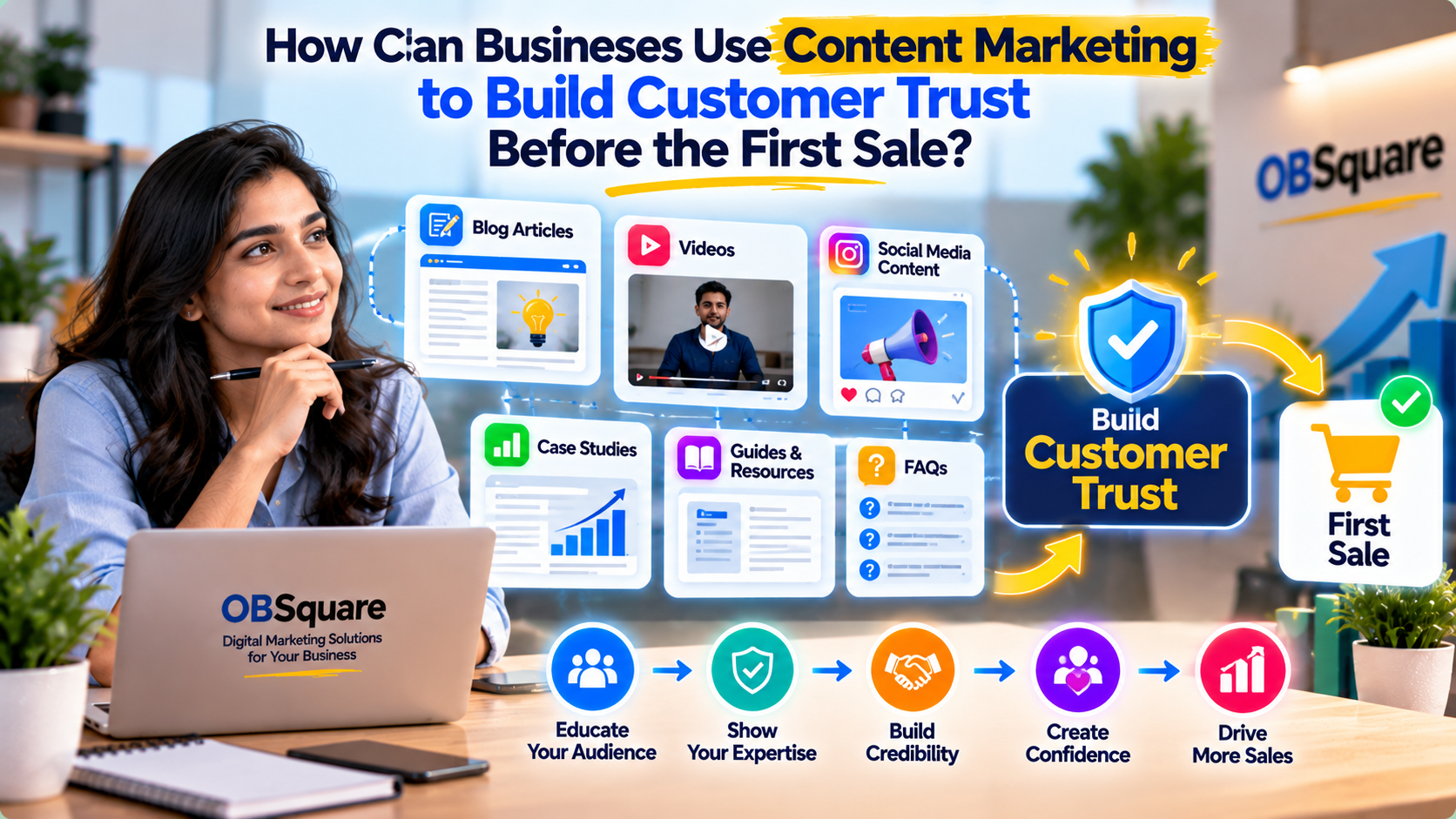
How Can Businesses Use Content Marketing to Build Customer Trust Before the First Sale?
Introduction: Why Customer Trust Matters in Content Marketing
Before purchasing a product or service, customers often want to understand what a business offers, whether it can meet their needs, and why they should consider choosing it over other options.
For businesses, building this confidence before the first sale is an important part of digital marketing. Customers may discover a brand through a search engine, social media post, online advertisement, blog article, or recommendation. The information they encounter can influence how they understand the business and whether they feel comfortable taking the next step.
Content marketing helps businesses provide useful information throughout this journey. Instead of focusing only on promotions, businesses can answer questions, explain services, share practical advice, and demonstrate their knowledge.
When content is accurate, relevant, and consistent, it can help potential customers make informed decisions and develop confidence in a brand.
1. Understand What Your Customers Need Before They Buy
Effective content marketing begins with understanding the questions and concerns customers have before making a purchasing decision.
Different customers may need different types of information. Someone discovering a service for the first time may need a basic explanation, while someone comparing providers may want to understand pricing, features, timelines, and service quality.
Businesses should identify:
- The problems customers are trying to solve.
- Questions they ask before making contact.
- Concerns that prevent them from purchasing.
- Factors they use to compare competing options.
- Information they need to feel confident in their decision.
- Common misunderstandings about the product or service.
For example, someone considering a website development service may want to know the difference between static and dynamic websites, what the development process involves, and which features are appropriate for their business.
A business that answers these questions clearly helps customers understand their options before requesting a quotation.
Customer interviews, enquiry records, sales conversations, reviews, and keyword research can all provide useful insights for developing relevant content.
2. Use Educational Blog Articles to Demonstrate Expertise
Blog articles are an effective way to explain topics in greater detail than a short advertisement or social media post allows.
Businesses can publish articles that address customer problems, clarify industry concepts, compare available options, and explain how their services work.
Useful blog topics include:
- Common mistakes customers should avoid.
- Step-by-step guides for solving relevant problems.
- Explanations of products and services.
- Comparisons between different solutions.
- Answers to frequently asked questions.
- Factors to consider before choosing a provider.
- Practical advice based on genuine business experience.
For example, a digital marketing agency could publish an article explaining how businesses can evaluate their current online presence before investing in marketing services.
Such an article provides value even before the reader becomes a customer.
To build credibility, blog content should be accurate, easy to understand, well organized, and supported by reliable evidence where appropriate. Articles should avoid exaggerated promises and should distinguish established facts from opinions or recommendations.
3. Create Content That Addresses Every Stage of the Customer Journey
Customers rarely move from discovering a business to purchasing a service in one step. They may need to learn about a problem, explore possible solutions, compare providers, and evaluate the business before making a decision.
A useful content strategy supports these different stages.
Awareness stage
At this stage, customers are identifying a problem or learning about a topic.
Suitable content includes introductory guides, educational social media posts, short videos, and articles explaining common challenges.
Consideration stage
Customers begin evaluating possible solutions and comparing alternatives.
Useful content includes detailed service explanations, comparison guides, process descriptions, frequently asked questions, and demonstrations.
Decision stage
Customers are closer to choosing a provider and need specific information to support their decision.
Suitable content includes transparent service details, genuine case studies, relevant testimonials, project examples, and consultation information.
Post-purchase stage
After purchasing, customers may need guidance on using a product, understanding a service, or achieving better results.
Tutorials, support articles, onboarding resources, and practical recommendations can help strengthen the ongoing customer relationship.
Mapping content to these stages helps businesses provide the right information at the right time.
4. Use Video Marketing to Explain Products and Services
Videos can communicate information in a direct and engaging format. They allow businesses to demonstrate products, explain processes, introduce team members, and answer common questions.
For potential customers, a well-produced video may make an unfamiliar service easier to understand.
Businesses can create:
- Short educational videos.
- Product demonstrations.
- Service process explanations.
- Frequently asked question videos.
- Behind-the-scenes content.
- Interviews with relevant experts.
- Genuine customer stories, with appropriate permission.
For example, a digital marketing agency could create a short video explaining how a content calendar helps businesses plan their social media activities.
The video can introduce the concept, while a related blog article provides a more detailed explanation.
Video quality matters, but expensive production equipment is not always necessary. Clear audio, useful information, readable captions, and a well-structured message can be more important than elaborate visual effects.
5. Share Genuine Case Studies and Customer Experiences
Potential customers often want evidence that a business understands their needs and can deliver the services it describes.
Case studies and customer testimonials can provide helpful context when they accurately represent real experiences.
A useful case study typically explains:
- The customer's initial challenge.
- The objectives of the project.
- The approach taken.
- The work completed.
- The results that can be supported by evidence.
- Lessons learned from the project.
For example, a business may describe how it improved the structure of a client's website and made service information easier to access.
If measurable results are available, they should be presented accurately with appropriate context, such as the reporting period and other factors that may have influenced the outcome.
Businesses should obtain appropriate permission before publishing customer names, photographs, testimonials, or confidential project information.
Never invent customer stories, fabricate statistics, or imply that every customer will achieve identical results.
6. Build Brand Credibility Through Consistent Content
Customer trust develops through repeated interactions rather than one isolated piece of content.
If a business publishes helpful information regularly but provides inconsistent service descriptions, conflicting contact details, or exaggerated claims elsewhere, potential customers may become uncertain about its credibility.
Consistency should extend across:
- Website pages and blog articles.
- Social media profiles and posts.
- Business listings.
- Email communications.
- Advertisements and landing pages.
- Published testimonials and case studies.
- Service descriptions and pricing information.
Businesses should maintain a consistent tone of voice and visual identity while ensuring that factual information remains accurate.
A simple content calendar can help coordinate topics, publishing dates, responsibilities, and campaign goals.
Consistency does not mean publishing something every day regardless of quality. It means maintaining a reliable standard of communication and providing useful information when the audience needs it.
7. Use Social Media Content to Build Relationships
Social media gives businesses opportunities to share information, answer questions, and communicate directly with potential customers.
Rather than treating every post as a sales pitch, businesses can use social platforms to demonstrate expertise and help their audience understand relevant topics.
Effective content formats include:
- Educational carousel posts.
- Short explanatory videos.
- Industry tips and practical advice.
- Answers to common customer questions.
- Project updates and behind-the-scenes content.
- Relevant business announcements.
- Links to detailed blog articles and resources.
Businesses should also respond professionally to genuine questions and comments.
For example, if followers frequently ask about the cost of a service, a business could publish a post explaining the main factors that influence pricing instead of repeatedly responding with a generic sales message.
This approach helps potential customers learn more about the service and decide whether it fits their needs.
8. Make Website Content Clear, Helpful, and Transparent
A business website is often the central destination where customers evaluate the information they discover through other marketing channels.
Content should explain what the business offers, who its services are intended for, how the process works, and how visitors can get further information.
Important website content includes:
- Clear service descriptions.
- An informative About Us page.
- Relevant portfolio examples.
- Frequently asked questions.
- Accurate contact information.
- Transparent pricing details where appropriate.
- Genuine customer testimonials.
- Clear calls to action.
Businesses should avoid vague claims such as “the best service for everyone” without providing useful evidence or explaining what makes the offering suitable.
Clear communication helps customers understand the business and decide whether to make an enquiry.
The website should also be mobile-friendly, easy to navigate, and convenient to use so that interested visitors can access information without unnecessary difficulty.
9. Combine Content Marketing With SEO, AEO, and GEO
Content marketing becomes more useful when customers can discover the information through relevant digital channels.
SEO: Search Engine Optimization
SEO helps businesses organize and improve their content for relevant organic search discovery. Useful articles, descriptive page titles, logical headings, and relevant internal links can help visitors find information that matches their needs.
AEO: Answer Engine Optimization
AEO focuses on providing clear and useful answers to customer questions. Businesses can develop FAQ pages, direct explanations, and well-structured educational content that addresses common concerns.
GEO: Generative Engine Optimization
GEO focuses on making brand information clear, credible, and understandable across AI-powered discovery experiences. Businesses can support this work through accurate service descriptions, useful original content, consistent business information, and credible supporting evidence.
These approaches complement content marketing, but none guarantees a particular search ranking, AI citation, or customer conversion.
The priority should remain the quality and usefulness of the information being published.
10. Measure Whether Your Content Builds Customer Trust
Content marketing should be evaluated according to its purpose and its contribution to business objectives.
Useful indicators include:
- Visits to educational articles and service pages.
- Organic search impressions and clicks.
- Engagement with relevant video content.
- Visits from social media and email campaigns.
- Clicks from blog articles to service pages.
- Enquiry submissions influenced by content.
- Questions customers ask before purchasing.
- Leads and sales associated with content interactions.
Businesses can use website analytics, search reporting, CRM records, and customer feedback to evaluate performance.
Not every trust-building activity generates an immediate sale. Some content helps customers understand the business long before they are ready to enquire.
For this reason, businesses should consider both direct conversions and the role content plays throughout the customer journey.
11. Common Content Marketing Mistakes That Damage Trust
Businesses can undermine their content marketing efforts when the information they publish does not meet customer expectations.
Common mistakes include:
- Publishing content that focuses only on selling.
- Making unsupported claims about results.
- Copying competitors without adding useful insights.
- Using fake testimonials or misleading case studies.
- Publishing outdated or inaccurate information.
- Creating content without understanding the audience.
- Using overly technical language without explanation.
- Publishing frequently without maintaining quality.
- Ignoring questions raised by customers.
- Failing to connect content with relevant services or resources.
A strong content strategy prioritizes honesty, usefulness, and consistency.
The goal is to help customers make informed decisions rather than pressure them into purchasing before they understand the offer.
12. How OBSquare Can Help Businesses Build Trust Through Content Marketing
OBSquare, a product of Seyfert Infotech, offers digital marketing services that help businesses communicate their value and develop a stronger online presence.
Its services include blog writing, SEO, AEO, GEO, social media management, content creation, creative design, website development, Google Business Profile management, Google Ads, and Meta Ads.
These services can be coordinated to provide useful information across different stages of the customer journey.
For example, a business could publish an educational blog, create social media posts based on its key insights, produce a short explanatory video, and link each format to a relevant service page.
SEO and content optimization can support discovery, while a clear website and enquiry process help interested customers take the next step.
The objective is to create consistent, useful communication that helps customers understand the business and evaluate its services with confidence.
Conclusion
Customer trust is an important foundation for long-term business relationships. Content marketing helps businesses develop that trust by answering questions, explaining services, demonstrating expertise, and providing reliable information before the first sale.
By combining educational blogs, videos, social media content, genuine case studies, and clear website information, businesses can support customers throughout their decision-making process.
Start by identifying the questions your customers ask most often and creating useful content that answers them honestly. Measure how that content supports engagement and enquiries, then refine the strategy based on customer feedback and performance data.
A customer-focused content marketing strategy can help businesses communicate more effectively, strengthen credibility, and create better opportunities for sustainable growth.
Want to build customer trust through digital content? Explore OBSquare's blog writing, content creation, SEO, social media management, and website development services to develop a content strategy aligned with your business objectives.