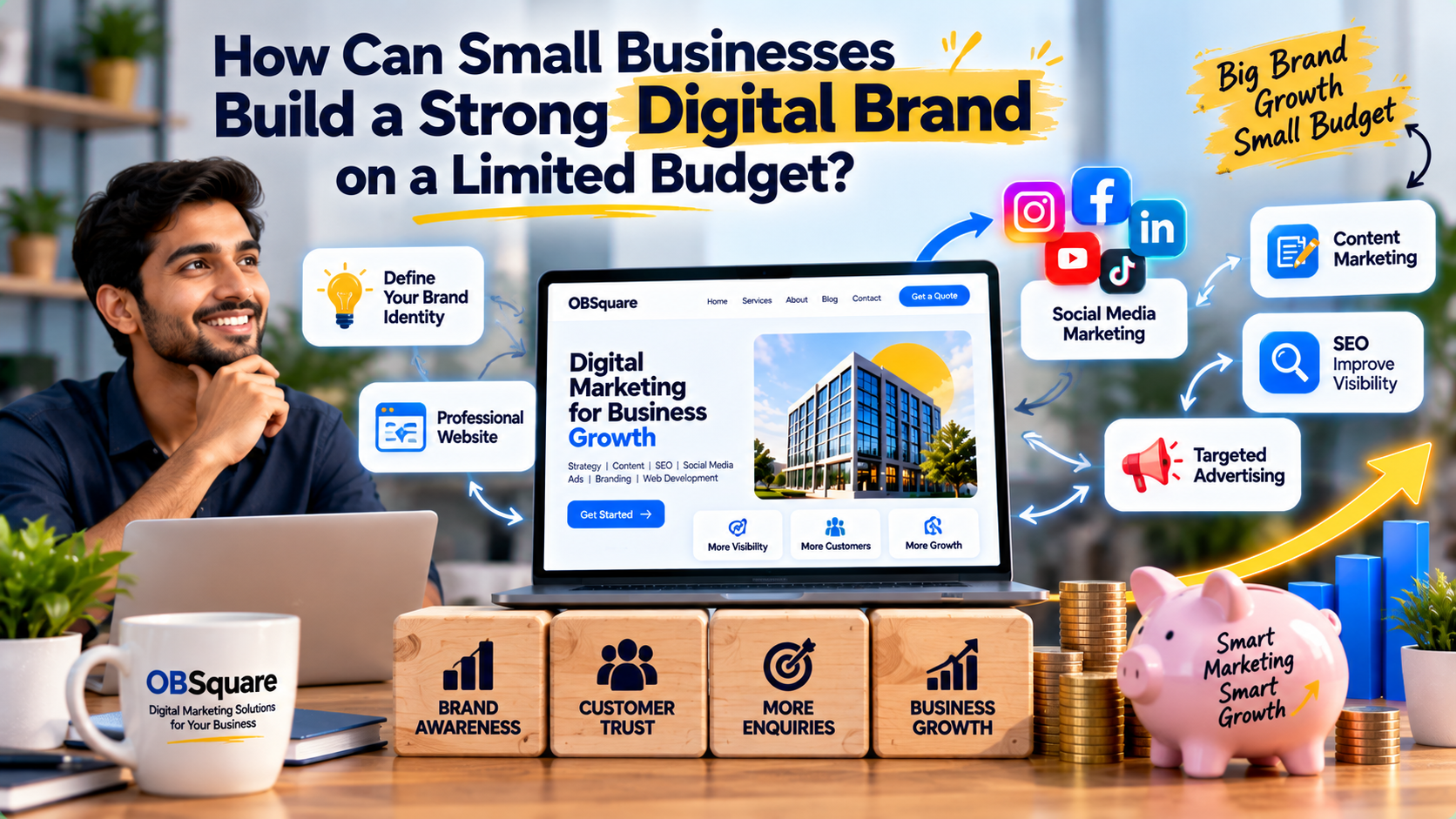
How Can Small Businesses Build a Strong Digital Brand on a Limited Budget?
Introduction: Why Digital Branding Matters for Small Businesses
In a competitive online marketplace, customers often discover and evaluate businesses before contacting them. They may visit a website, explore social media profiles, read customer reviews, or compare services with other providers.
For small businesses, creating a recognizable and trustworthy digital brand can make these interactions more effective. However, limited budgets can make it difficult to invest in every marketing channel, professional creative service, and advertising opportunity.
The solution is not necessarily to spend more. It is to build a clear brand identity, understand the target audience, choose suitable channels, and use available resources strategically.
With a structured digital marketing plan, small businesses can communicate their value, improve brand recognition, and develop stronger customer relationships without relying on expensive campaigns.
1. Define Your Brand Identity Before Spending on Marketing
A strong digital brand begins with a clear understanding of what the business represents and why customers should choose it.
Before investing in advertising or content creation, businesses should define their brand identity.
Consider these questions:
- What products or services does the business provide?
- Who are its ideal customers?
- What problems does it solve?
- What makes its offering different from competitors?
- What qualities should customers associate with the brand?
- What tone of voice best represents the business?
For example, a small digital marketing agency may position itself around practical marketing solutions, transparent communication, and services designed for growing businesses.
Once the positioning is clear, the same message should appear consistently across the website, social media profiles, business listings, advertisements, and other customer touchpoints.
A clear brand identity helps customers understand the business before they decide to enquire.
2. Create Consistent Branding Across Digital Platforms
Customers may encounter a business through several platforms before making a decision. Inconsistent branding can make the business appear less organized or difficult to recognize.
Small businesses should establish a simple set of brand guidelines that can be followed across all digital channels.
These guidelines can include:
- A consistent logo and approved logo variations.
- A defined colour palette and typography.
- A recognizable visual style for posters and videos.
- A consistent writing tone and brand message.
- Accurate business descriptions and contact information.
- Consistent presentation of products and services.
Businesses do not need an expensive brand manual to begin. A simple document containing the logo, colours, fonts, visual examples, and key messaging can be sufficient for maintaining consistency.
Consistency makes it easier to recognize the brand across different platforms and helps create a more professional digital presence.
3. Build a Professional Website That Supports Your Brand
A website provides a central place where potential customers can learn about a business, explore its services, and submit enquiries.
Even when a business relies heavily on social media, a professional website can help organize important information and provide greater control over the customer experience.
A budget-conscious website strategy should prioritize the essentials:
- A clear homepage explaining what the business offers.
- Dedicated pages for important products or services.
- An informative About Us page.
- Visible contact details and enquiry options.
- A mobile-friendly layout.
- Fast, reliable page loading.
- Relevant images and clear calls to action.
- Basic SEO and analytics setup.
Businesses should focus on usability and useful information rather than unnecessary design features.
For example, a service-based business may benefit more from clear service descriptions, genuine project examples, and an easy enquiry form than from expensive animations that do not help customers make decisions.
A website should evolve as the business grows, with improvements guided by customer needs and performance data.
4. Use Social Media Marketing Strategically
Social media gives small businesses opportunities to communicate with their audiences, share useful content, demonstrate products, and build brand awareness.
However, maintaining too many social media accounts can consume time and resources without delivering meaningful results.
Instead, businesses should identify the platforms most relevant to their customers and concentrate on maintaining a useful, consistent presence there.
An effective social media approach can include:
- Educational posts related to customer problems.
- Product demonstrations and service explanations.
- Short-form videos and behind-the-scenes content.
- Genuine customer stories and testimonials with permission.
- Frequently asked questions.
- Business updates and announcements.
- Clear links to relevant website pages.
For example, a local service provider could publish short videos answering common customer questions and use informative posts to explain its services.
The goal is to create content that helps the intended audience rather than posting simply to maintain a daily publishing streak.
5. Use Content Marketing to Build Brand Authority
Content marketing allows businesses to demonstrate expertise by providing useful information before customers make a purchase.
Blog articles, guides, short videos, infographics, and educational social media posts can help answer questions and explain complex services.
Small businesses can develop content around three practical themes:
Educational content: Answer common questions and explain how customers can solve relevant problems.
Service-related content: Describe available services, processes, benefits, and factors customers should consider.
Trust-building content: Share genuine project examples, documented results, business experiences, and customer feedback with appropriate permission.
One well-researched article can also become several social media posts, a short video, an email newsletter, or a visual summary.
Repurposing content helps businesses use their time efficiently while adapting information to different platforms.
Content should be accurate, relevant, and genuinely useful. Publishing large quantities of repetitive material is not a substitute for quality.
6. Improve Online Visibility Through SEO
Search Engine Optimization (SEO) helps businesses improve their chances of appearing in relevant unpaid search results.
For small businesses with limited budgets, SEO can be an important long-term marketing activity because useful website content and technical improvements can continue supporting discovery after publication.
Practical starting points include:
- Researching the search terms potential customers use.
- Creating useful pages for important services.
- Writing clear titles and meta descriptions.
- Improving website navigation and internal links.
- Making the website mobile-friendly.
- Using descriptive image alt text.
- Publishing helpful articles that address customer questions.
- Monitoring organic performance through Google Search Console.
Local businesses should also maintain an accurate Google Business Profile where eligible, including their business details, service information, hours, and contact options.
SEO results take time and depend on factors such as competition, website quality, relevance, and search behaviour. Businesses should avoid promises of guaranteed rankings or immediate traffic growth.
7. Use Low-Cost Digital Marketing Tools Wisely
The right tools can help small businesses manage marketing activities without introducing unnecessary costs.
Depending on their needs, businesses may use:
- Google Analytics for website traffic and conversion analysis.
- Google Search Console for organic search performance.
- Google Business Profile for eligible local business visibility and customer interactions.
- Design tools for creating social media graphics.
- Video editing tools for producing short-form content.
- Email marketing platforms for managing permission-based communications.
- Spreadsheets or CRM tools for tracking enquiries and follow-ups.
- Social media scheduling tools for organizing content.
Businesses should evaluate tools based on their actual requirements, ease of use, data needs, and pricing.
Starting with free or low-cost options can be sensible, but businesses should also account for the time required to learn and maintain them. A paid tool may be worthwhile when it saves substantial time or supports a clear business objective.
8. Use Paid Advertising With a Clear Budget
Organic marketing can support long-term visibility, while paid advertising may help businesses reach selected audiences more quickly.
However, a limited budget makes campaign planning particularly important.
Before launching an advertisement, businesses should define:
- The campaign objective.
- The intended audience.
- The product or service being promoted.
- The offer or message.
- The landing page or contact destination.
- The available budget and campaign duration.
- The conversion event being measured.
For example, a business promoting a specific service could start with a controlled campaign focused on relevant searches or audiences, then assess the quality of enquiries before expanding spending.
Businesses should avoid judging success solely by impressions, clicks, or engagement. A campaign should be evaluated according to its purpose, such as generating qualified enquiries or sales.
Paid advertising is not mandatory for every business. The decision to invest should reflect customer demand, available resources, and the business's readiness to handle new enquiries.
9. Build Customer Trust Through Consistent Communication
Brand recognition is useful, but customers also need reasons to trust a business.
A small business can strengthen credibility through accurate information, professional communication, transparent service descriptions, and reliable customer support.
Useful practices include:
- Keeping business information up to date.
- Responding professionally to genuine customer questions.
- Explaining service processes and expectations clearly.
- Publishing authentic testimonials with permission.
- Showing genuine examples of completed work.
- Avoiding exaggerated claims and unsupported promises.
- Providing a straightforward enquiry and follow-up process.
Businesses should never purchase fake reviews or invent customer experiences to create an appearance of credibility.
Trust develops through consistent interactions and the quality of the experience customers receive. Digital marketing should reflect the actual value and service quality the business can deliver.
10. Measure Results Without Overspending
Small businesses do not need an elaborate analytics system to begin evaluating their digital marketing performance.
A simple monthly report can help identify which activities are producing useful results and which need improvement.
Relevant metrics may include:
- Website visits from relevant audiences.
- Organic search clicks and impressions.
- Social media reach and meaningful engagement.
- Visits to important service pages.
- Calls, form submissions, and direct enquiries.
- Qualified leads generated.
- Conversion rates.
- Marketing expenditure and cost per qualified lead.
Businesses should choose metrics that match their goals. For example, if the main objective is generating service enquiries, qualified leads are generally more meaningful than follower growth alone.
Review performance regularly, compare results across consistent reporting periods, and make changes based on evidence.
If a particular channel attracts relevant customers at a sustainable cost, it may deserve additional attention. If another channel produces activity without meaningful business outcomes, investigate why before continuing to invest in it.
11. Common Digital Branding Mistakes Small Businesses Should Avoid
Limited budgets make it especially important to avoid unnecessary marketing expenditure and inconsistent execution.
Common mistakes include:
- Trying to market on every platform simultaneously.
- Changing the brand identity too frequently.
- Publishing content without a defined audience.
- Spending on advertisements before preparing a suitable landing page.
- Ignoring website usability and mobile experience.
- Copying competitors without establishing a clear difference.
- Purchasing fake followers or reviews.
- Measuring success through vanity metrics alone.
- Expecting immediate results from every marketing activity.
- Failing to respond to customer enquiries.
A focused strategy with clear priorities is often easier to manage than an ambitious plan that exceeds the available budget and resources.
12. How OBSquare Can Help Small Businesses Build Their Digital Brand
OBSquare, a product of Seyfert Infotech, offers digital marketing services that can help businesses establish and strengthen their online presence.
Its services include SEO, AEO, GEO, website development, social media management, blog writing, content creation, creative design, Google Business Profile management, Google Ads, and Meta Ads.
These services can be selected and coordinated according to a business's goals, target audience, and available budget.
For example, a small business may begin by improving its website and brand presentation, then introduce consistent social media content and SEO-focused articles. Paid campaigns can be considered when there is a clear objective and a suitable process for handling enquiries.
The priority should be to identify the most important marketing needs first, establish a practical plan, and expand activities as the business develops.
Conclusion
Building a strong digital brand does not always require a large marketing budget. Small businesses can make meaningful progress by defining their brand identity, maintaining a professional website, creating useful content, selecting appropriate social media platforms, and improving their online visibility through SEO.
The key is to prioritize activities that support business goals, maintain consistent communication, and measure outcomes rather than spending simply to appear active online.
Start with the essentials, understand your audience, and improve your digital marketing approach as you learn what works. With a focused strategy, small businesses can build a recognizable digital brand and create a stronger foundation for sustainable growth.
Want to strengthen your business's digital presence? Explore OBSquare's digital marketing, branding, content creation, SEO, and website development services to identify a practical approach that fits your business goals.