How Can a Multi-Channel Digital Marketing Strategy Create More Opportunities for Business Growth?
What Is Multi-Channel Digital Marketing?
Multi-channel digital marketing is a strategy where a business uses multiple digital platforms and marketing channels to reach, engage, and convert potential customers.
Instead of depending only on social media, search engines, paid advertising, or a website, businesses can connect several channels together.
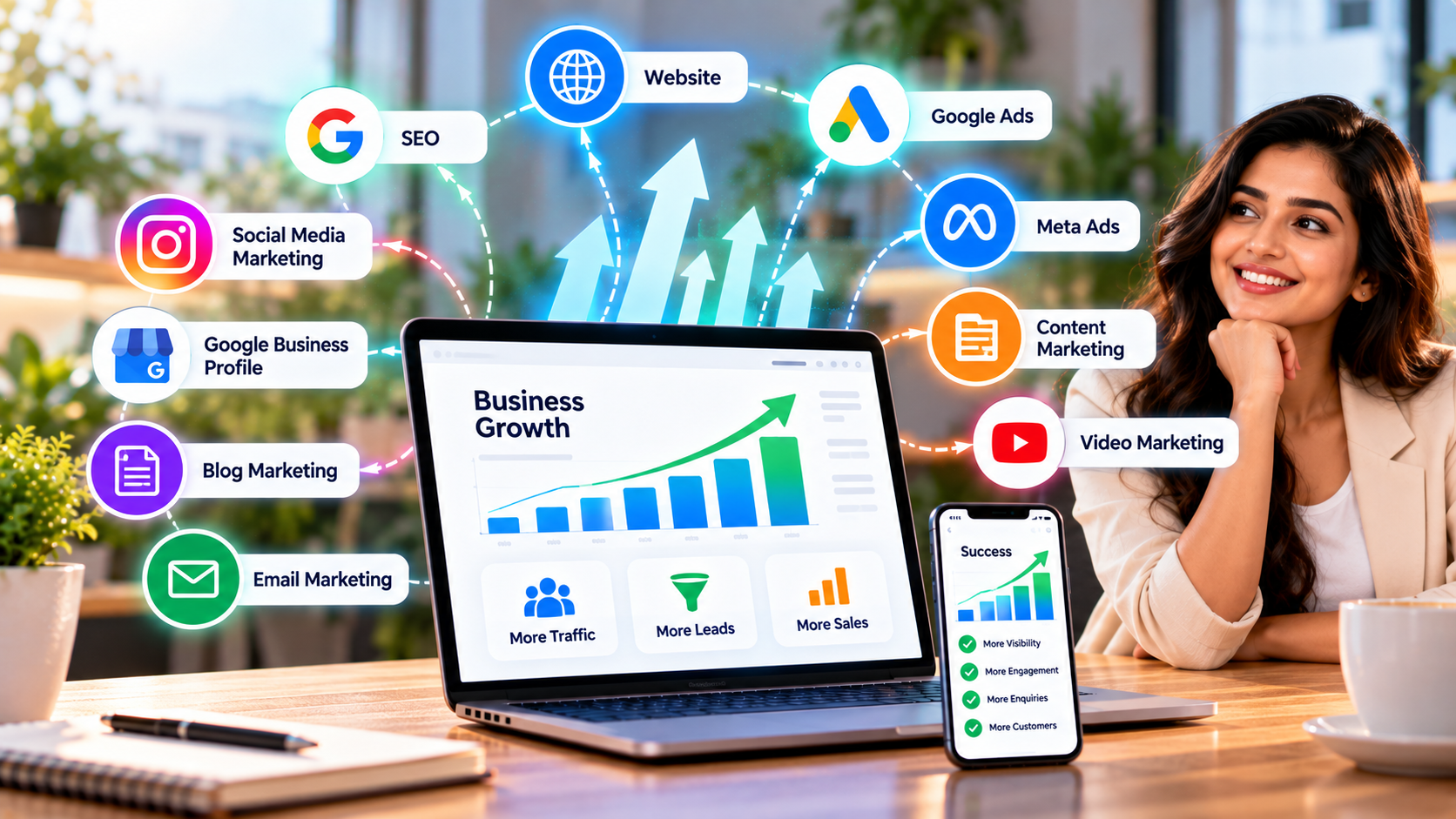
These channels can include:
- SEO
- Google Business Profile
- Social media marketing
- Content marketing
- Blog marketing
- Google Ads
- Meta Ads
- Reels and short-form videos
- Email marketing
- Website marketing
- Online customer engagement
Each channel has a different role, but together they can create a stronger digital presence.
Why Should Businesses Use Multiple Digital Marketing Channels?
Customers do not all discover businesses in the same way.
One person may search Google.
Another may discover a business through Instagram.
Someone else may see a Reel, read a blog, check Google reviews, and then visit the website.
If a business depends entirely on one channel, it may miss potential customers who use other platforms.
A multi-channel strategy creates more opportunities for people to discover the business wherever they spend time online.
How Can SEO Support a Multi-Channel Strategy?
SEO helps businesses improve their visibility in organic search results.
When customers search for products, services, questions, or solutions, useful SEO-focused content can help a business appear in relevant searches.
SEO can support other channels by providing a long-term source of organic traffic.
For example:
Social Media → Website → SEO Content → Enquiry
A customer may discover a business through social media and later search for the company or its services on Google.
A strong SEO strategy ensures the business has useful information available when that customer continues researching.
How Can Social Media Support Other Digital Marketing Channels?
Social media provides businesses with an opportunity to communicate regularly with their audience.
A business can use social platforms to promote:
- Blog articles
- Products
- Services
- Videos
- Reels
- Offers
- Customer stories
- Website content
For example, a business can publish a detailed blog article and then create multiple social media posts based on the same topic.
This allows different channels to support each other instead of creating completely separate marketing activities.
How Can Google Ads Provide Immediate Search Visibility?
SEO can take time to build.
Google Ads can provide businesses with paid visibility when potential customers search for relevant products or services.
This can be especially useful when businesses want to promote:
- New services
- Specific products
- Local services
- Offers
- Seasonal campaigns
- High-intent searches
Google Ads can work alongside SEO rather than replacing it.
While paid campaigns provide immediate opportunities, SEO can help build longer-term organic visibility.
How Can Meta Ads Expand Audience Reach?
Google Ads primarily captures people who are actively searching.
Meta Ads can help businesses reach people while they are browsing social platforms such as Facebook and Instagram.
This makes the two channels useful for different parts of the customer journey.
For example:
Meta Ads → Awareness → Website → SEO Content → Enquiry
A person may first discover a business through a social advertisement and later search for more information before making a decision.
Using multiple channels allows businesses to remain visible during these different stages.
How Can Content Marketing Connect Different Channels?
Content marketing can act as a foundation for many digital marketing activities.
A single piece of useful content can be adapted into multiple formats.
For example, one blog article can become:
- Instagram posts
- Facebook content
- Reels
- Short videos
- Website content
- Email content
- Advertising material
This allows businesses to extend the value of their content instead of creating completely separate ideas for every platform.
How Can Google Business Profile Support Local Marketing?
For businesses serving specific locations, Google Business Profile can become an important part of a multi-channel strategy.
Customers may discover a business through local search and then:
- Call the business
- Visit the website
- Request directions
- Read reviews
- View photos
- Explore services
Google Business Profile can therefore connect local search visibility with direct customer actions.
When combined with local SEO, social media, content, and advertising, it can strengthen a business's local digital presence.
How Can Video Marketing Support Multi-Channel Campaigns?
Video content can be distributed across multiple digital platforms.
A business can create one video and adapt it for:
- Instagram Reels
- YouTube
- Website pages
- Advertising campaigns
- Social media stories
Video can introduce products, demonstrate services, answer questions, showcase customer experiences, and communicate business stories.
This makes video useful across different stages of the customer journey.
How Can Multiple Channels Improve the Customer Journey?
A customer may interact with a business several times before becoming a customer.
For example:
Step 1: The customer discovers a Reel.
Step 2: They visit the business's social media profile.
Step 3: They visit the website.
Step 4: They read a blog article.
Step 5: They search for the business on Google.
Step 6: They check reviews.
Step 7: They contact the business.
This demonstrates why businesses should not evaluate every marketing channel in isolation.
Different channels can contribute to different stages of the customer journey.
How Can Multi-Channel Marketing Increase Brand Visibility?
Using multiple digital channels creates more opportunities for customers to encounter the same business.
A potential customer may see the business through:
- Google Search
- Google Business Profile
- Reels
- Blog articles
- Google Ads
- Meta Ads
- Website content
Repeated exposure can make the business more familiar to potential customers.
The important factor is maintaining consistent branding and messaging across these channels.
How Can Businesses Avoid Inconsistent Digital Marketing?
Using multiple channels does not mean every platform should receive completely unrelated content.
A strong multi-channel strategy should maintain consistency in:
- Brand identity
- Business information
- Core messaging
- Visual style
- Customer communication
- Contact details
- Calls to action
For example, the business name, services, phone number, website, and key messaging should remain consistent across relevant platforms.
This makes the business easier for customers to recognize and trust.
How Can Businesses Measure Multi-Channel Marketing Performance?
Businesses need to understand which channels are contributing to their objectives.
Important metrics can include:
- Website traffic
- Search visibility
- Social media reach
- Engagement
- Video views
- Ad clicks
- Leads
- Enquiries
- Phone calls
- Website conversions
- Customer acquisition
The most important metric will depend on the business objective.
A business focused on lead generation may prioritize enquiries and qualified leads, while a brand awareness campaign may focus more on reach and engagement.
Why Should Businesses Avoid Depending on Only One Channel?
Digital platforms can change over time.
Algorithms, advertising costs, customer behavior, competition, and search trends can all change.
If a business depends entirely on one platform, changes to that platform can significantly affect its marketing performance.
A multi-channel strategy creates greater diversification.
For example, a business can combine:
SEO + Social Media + Google Ads + Meta Ads + Content + Google Business Profile
This provides multiple ways to reach potential customers.
How Can OBSquare Help Businesses Build a Multi-Channel Digital Marketing Strategy?
OBSquare provides a range of digital marketing services that can work together as part of a multi-channel strategy.
Depending on business requirements, this can include:
- SEO
- AEO
- GEO
- Blog writing
- Content marketing
- Social media marketing
- Google Business Profile management
- Google Ads
- Meta Ads
- Reels
- Video content
- AI-assisted videos
- Customer testimonials
- Business interviews
- Product videos
- Digital content creation
OBSquare can help businesses identify which channels are most relevant to their audience and connect them around common business objectives.
The goal is not to use every available digital platform simply because it exists.
The goal is to select the right channels and create a connected strategy that supports visibility, engagement, enquiries, and conversions.
How Can Businesses Build an Effective Multi-Channel Strategy?
Businesses can start by answering a few important questions:
- Who are our target customers?
- Where do they search for information?
- Which platforms do they use?
- What problems are they trying to solve?
- Which channels can reach them effectively?
- What content do they need?
- What action should they take?
- How will we measure results?
Based on these answers, businesses can select the most relevant channels.
A smaller business may not need to actively manage every platform.
A focused combination of three or four well-managed channels can be more effective than being present everywhere without a clear strategy.
How Can Multi-Channel Marketing Create Long-Term Growth?
A strong multi-channel strategy can create a digital marketing system where different activities support each other.
For example:
SEO brings organic search visibility.
Content marketing educates potential customers.
Social media builds engagement.
Reels and videos capture attention.
Google Ads reaches high-intent searches.
Meta Ads introduces the business to new audiences.
Google Business Profile supports local discovery.
Website and landing pages provide detailed information.
Together, these channels can create more opportunities for customers to discover, evaluate, and contact a business.
Conclusion
A multi-channel digital marketing strategy allows businesses to move beyond depending on a single platform.
By combining SEO, content marketing, social media, Google Ads, Meta Ads, Google Business Profile, video marketing, and other relevant channels, businesses can create multiple paths for potential customers to discover and interact with their brand.
The objective is not simply to be present on more platforms. It is to create a connected digital marketing system where each channel supports the customer journey and contributes to business growth.
With the right strategy, businesses can strengthen their online visibility, reach more relevant audiences, generate more enquiries, and build a sustainable digital presence over time.