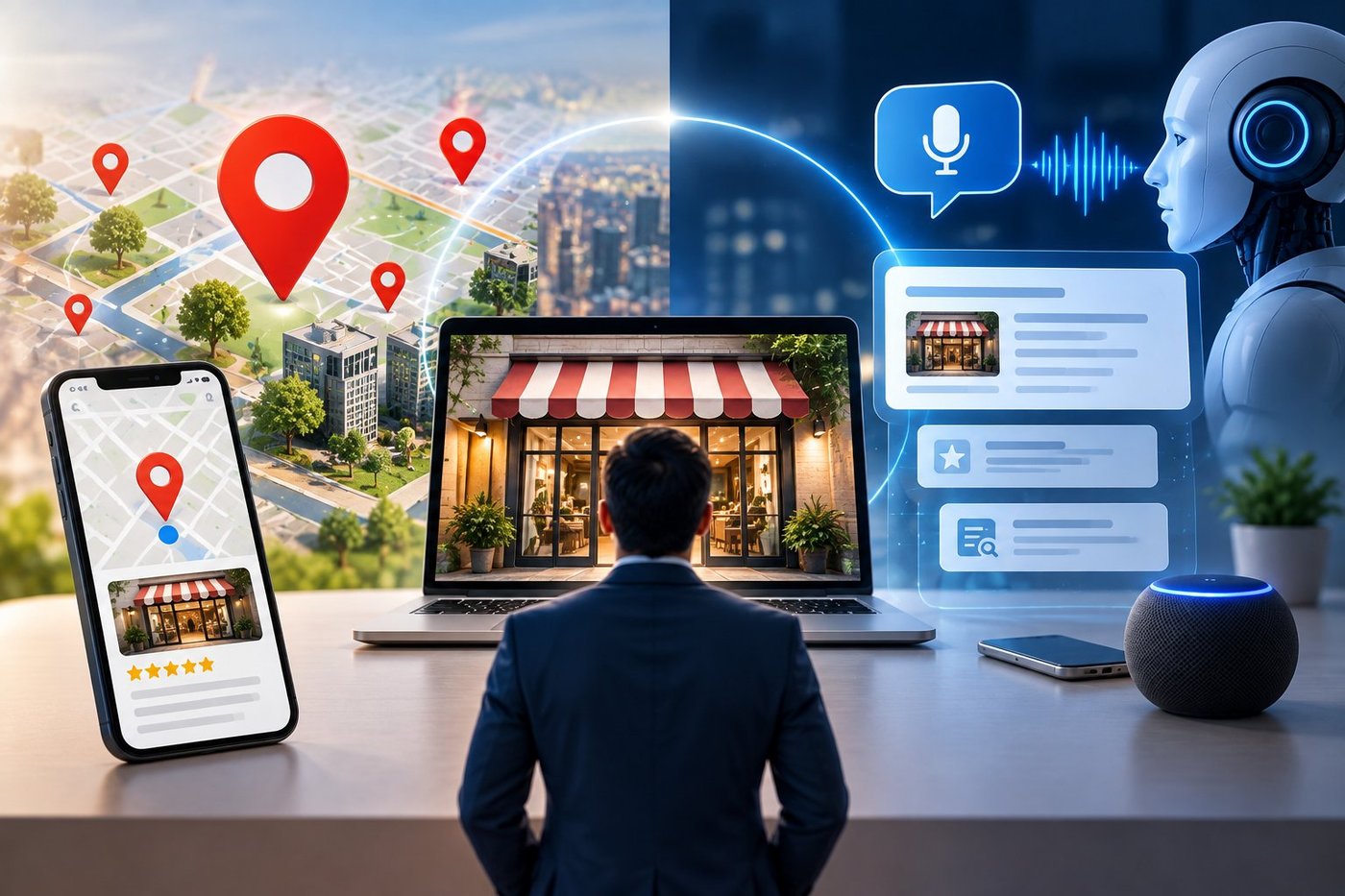
How GEO and AEO Are Changing the Way Businesses Get Found Online
Introduction
The way people search for information online is changing rapidly.
Earlier, users would enter a keyword into a search engine, browse through a list of websites, and choose a result that appeared relevant. Today, people increasingly expect direct answers to their questions through search engines, AI-powered tools, voice assistants, and conversational platforms.
This shift is creating new opportunities for businesses to improve how they are discovered online.
Traditional Search Engine Optimization (SEO) remains important, but businesses also need to think about how their content can be discovered, understood, and referenced by modern answer and generative search systems.
This is where Answer Engine Optimization (AEO) and Generative Engine Optimization (GEO) come into the picture.
By creating clear, useful, trustworthy, and well-structured content, businesses can prepare their digital presence for the changing search experience.
What Is Answer Engine Optimization?
Answer Engine Optimization, commonly known as AEO, focuses on making content easier for answer engines to understand and use when responding to user questions.
Instead of focusing only on ranking for a keyword, AEO considers the questions users are actually asking.
For example, instead of targeting only:
"Digital marketing agency"
a business could create content that addresses questions such as:
- What does a digital marketing agency do?
- How does SEO help a business?
- How much does digital marketing cost?
- What is local SEO?
- How can businesses generate leads online?
Answer-focused content gives search systems clear information that can potentially be used when answering relevant queries.
What Is Generative Engine Optimization?
Generative Engine Optimization (GEO) focuses on improving the visibility and representation of a brand's information in AI-generated search and answer experiences.
Modern users may ask an AI system a detailed question rather than searching for individual websites.
For example, someone might ask:
"What are the best ways for a small business to generate leads online?"
Instead of receiving only a traditional list of links, the user may receive a generated response that summarizes different approaches.
For businesses, this creates a new consideration: How can their expertise, information, products, or services become more discoverable and understandable within these AI-driven experiences?
GEO focuses on helping content provide clear, relevant, authoritative information that generative systems can understand.
Why Search Is Moving Beyond Traditional Rankings
Traditional search optimization generally focuses on improving a website's ability to appear prominently in search results.
But the search experience is becoming more conversational.
Users are increasingly asking complete questions instead of entering short keywords.
For example:
Traditional search:
"SEO agency Chennai"
Conversational search:
"Which SEO strategies should a local business use to get more customers from Google?"
The second type of query requires content that provides context and a meaningful answer.
This means businesses should not create content only around isolated keywords. They should also understand the questions, problems, and decisions their target audience is trying to solve.
1. Create Content That Directly Answers Customer Questions
One of the most effective ways to prepare for AEO and GEO is to understand what your audience wants to know.
Businesses can identify questions through:
- Customer conversations
- Sales enquiries
- Frequently asked questions
- Search queries
- Industry discussions
- Website search data
- Social media questions
- Common customer problems
Once these questions are identified, businesses can create dedicated content that provides direct and useful answers.
Instead of writing content simply to include keywords, focus on answering the customer's actual question.
2. Build Strong Topic Authority
Search engines and AI-powered systems need to understand what a business knows and what information it provides.
Publishing one article about a topic may not be enough to establish strong topical coverage.
Businesses can create a collection of related content around their core areas of expertise.
For example, a digital marketing company could create content covering:
- SEO
- Local SEO
- Google Ads
- Social media marketing
- Content marketing
- AEO
- GEO
- Website optimization
- Lead generation
- Marketing automation
These related topics can create a stronger content ecosystem and demonstrate broader expertise.
3. Make Content Easy to Understand
Clear communication is becoming increasingly important.
Businesses should avoid unnecessarily complicated language when a simple explanation is possible.
Well-structured content can include:
- Descriptive headings
- Short paragraphs
- Bullet points
- Step-by-step explanations
- Frequently asked questions
- Definitions
- Examples
- Clear conclusions
This makes content easier for people to read and easier for automated systems to interpret.
The goal is not to write content specifically for machines. The priority should be creating genuinely useful information for people while presenting it in a structure that systems can understand.
4. Focus on Search Intent
A keyword by itself does not always explain what a user wants.
Consider the keyword:
"Google Ads"
The user could be looking for:
- A definition
- A tutorial
- Pricing information
- An advertising agency
- Campaign ideas
- Keyword research
- Conversion tracking
- Google Ads management
Understanding the intent behind a search allows businesses to create content that answers the right question.
A strong content strategy should consider different stages of the customer journey, including:
Awareness → Research → Comparison → Decision → Action
Content can then be created to support users at each stage.
5. Provide Specific and Useful Information
Generic content provides limited value.
Businesses should aim to provide information that is specific, practical, and relevant to their audience.
For example, instead of saying:
"SEO is important for businesses."
A more useful explanation would discuss:
- Why SEO matters
- Which businesses benefit from it
- What areas SEO covers
- How long SEO can take
- Which metrics businesses should track
- What mistakes businesses should avoid
Specific information gives users more value and makes the content more meaningful.
6. Demonstrate Real Expertise
Trust is an important part of building a strong online presence.
Businesses should demonstrate expertise through useful and accurate information rather than relying entirely on promotional language.
This can include:
- Industry knowledge
- Original insights
- Case studies
- Examples
- Expert opinions
- Research
- Practical recommendations
- Customer experiences
For a digital marketing website, content should demonstrate an understanding of real marketing challenges rather than simply repeating generic definitions.
7. Keep Business Information Consistent
Businesses should make sure their important information is consistent across their digital presence.
This can include:
- Business name
- Services
- Website information
- Contact details
- Company description
- Locations
- Brand information
A consistent digital presence makes it easier for users and search systems to understand who the business is and what it offers.
Businesses should review their website, business listings, social profiles, and other important online properties regularly.
8. Create Content Around Conversational Searches
People don't always search using short keywords.
Voice search, conversational search, and AI-powered search encourage users to ask complete questions.
Businesses can prepare for this by creating content around natural-language queries such as:
- How can a small business improve its Google ranking?
- What is the best digital marketing strategy for a local business?
- How can businesses generate leads through social media?
- How does Google Business Profile help local businesses?
- What should a business include on its SEO landing page?
This type of content can address specific customer needs while expanding the business's search visibility.
9. Use FAQs to Address Common Customer Questions
Frequently Asked Questions can be a valuable part of a website's content strategy.
An FAQ section can answer questions that customers commonly ask before making a decision.
For example, a digital marketing agency could answer:
How long does SEO take to show results?
What services does a digital marketing agency provide?
Is Google Ads suitable for small businesses?
How does local SEO work?
What is AEO?
What is GEO?
Clear answers help customers understand the service and can improve the overall usefulness of a website.
FAQs should be written naturally and should genuinely answer real questions rather than being created simply to manipulate search results.
10. Connect GEO and AEO With Your Existing SEO Strategy
GEO and AEO should not necessarily replace traditional SEO.
Instead, businesses can treat them as additional considerations within a broader search strategy.
A strong approach can include:
Technical SEO
Ensures that search engines can properly access and understand the website.
On-Page SEO
Improves page structure, keywords, headings, content, and internal linking.
Content Strategy
Creates useful information around customer needs and search intent.
AEO
Focuses on answering specific questions clearly and effectively.
GEO
Considers visibility and representation within generative search experiences.
Together, these activities can create a more comprehensive approach to modern search visibility.
How Businesses Can Prepare for the Future of Search
Businesses do not need to completely rebuild their websites to start preparing for these changes.
They can begin with simple improvements.
Understand Your Audience
Identify the questions customers ask before purchasing your products or services.
Improve Existing Content
Review old website pages and blogs and make them more useful, accurate, and comprehensive.
Create Topic-Based Content
Develop multiple related articles around your core services and areas of expertise.
Answer Questions Clearly
Include direct answers to common customer questions within relevant content.
Strengthen Your Brand Presence
Maintain accurate and consistent information across your website and other online platforms.
Demonstrate Expertise
Share practical knowledge, examples, case studies, and original insights.
Measure Performance
Monitor organic traffic, conversions, engagement, rankings, and other relevant indicators to understand what is working.
The Future of Search Is More Conversational
The future of search is moving toward experiences where users can ask increasingly detailed questions and receive direct, contextual answers.
This does not mean traditional search engines or SEO are disappearing.
Instead, the search ecosystem is expanding.
Businesses now need to consider how their information can be discovered through:
- Traditional search engines
- Local search
- Voice search
- Answer engines
- AI-powered search
- Conversational platforms
- Social media search
The businesses that adapt their content strategy to these changing behaviors can create more opportunities to remain visible as search continues to evolve.
Conclusion
The way customers discover businesses online is changing. Traditional SEO remains an important foundation, but businesses should also consider how their content can answer questions and provide useful information within modern search experiences.
AEO helps businesses create content that clearly addresses customer questions, while GEO focuses on improving visibility and representation in generative search environments.
The most effective approach is to focus on the fundamentals: useful content, clear information, strong expertise, accurate business details, and a deep understanding of customer search intent.
By incorporating AEO and GEO principles into an existing SEO and content strategy, businesses can build a stronger digital presence and prepare for the next generation of online search.